You've probably blamed your hair. The color. The age. The dry air. The shampoo you switched to last spring, and the one before that.
Here is the part nobody mentions at the salon: if you live almost anywhere in the United States, your hair rinses in hard water — every day — and hard water doesn't rinse clean. It dries and leaves a little of itself behind. You can see it on the shower door. You can see it crusted white on the shower head. You just can't see it on your hair, because there it's a film, not a crust. It only shows up as the light going out.
What follows is how one country has handled that for generations with a one-minute rinse, why it works when one more conditioner won't, and how to check in ten seconds whether your water is the reason. Then you decide.
Sources: U.S. Geological Survey; yvesrocherusa.com, read September 19, 2026.
Reason 01It Was Never Your Hair. It's the Water.
Hard water is simply water carrying dissolved minerals — mostly calcium and magnesium — picked up from the ground it travelled through. According to the U.S. Geological Survey, about 85% of American homes have it. It isn't dirty and it isn't dangerous. It just doesn't leave without a trace.
Every time hard water dries on a surface, the minerals stay. In a kettle they build a white crust. On a shower head they block the holes. On your hair, the same minerals settle as a faint film over every strand, wash after wash, the way frost settles — a little more each time.
The kettle
White crust on the base
The shower head
Holes crusted, spray goes sideways
The glass door
The haze that never wipes off
Your hair
A film, not a crust — the light goes out
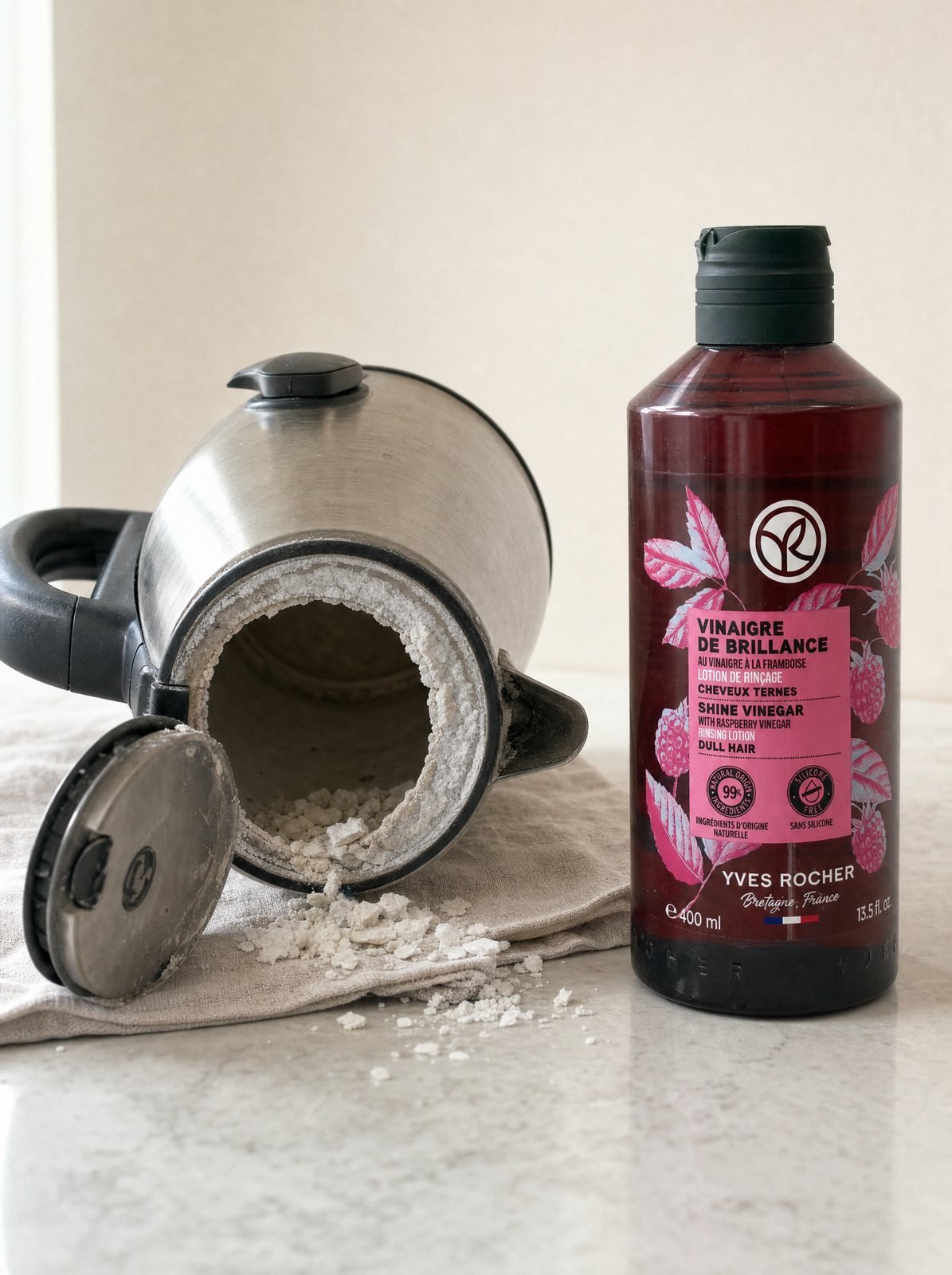
Now think about what hair actually needs in order to shine. Each strand is wrapped in a cuticle: tiny overlapping scales, like shingles on a roof. When the scales lie flat and the surface is clean, light bounces straight back — that clean reflection is what your eye reads as shine. Put a mineral film over it and the light scatters. Hair looks dull, feels heavier when it's wet, dries slower, and never looks quite clean, no matter how recently you washed it. Color looks flat a few weeks after it was done.
The tell is almost always the same: hair that changed the month you moved. Seattle to Phoenix. Portland to Denver. A soft-water city to a hard-water one. Nothing about your hair changed. The water did.
But here's the catch — and it's the part most people get exactly backwards.
Reason 02Everything You've Tried Added a Layer. This Takes One Off.
So you did what anyone does. A new shampoo. A heavier conditioner, then a lighter one. A mask. A gloss. Each one seemed to work — for about a wash. Here is why.
The fast way to make hair look shiny is to coat it. Most of the shine in the hair aisle comes from silicones (the ingredients ending in -cone or -xane on the back of the bottle), which lay a glossy film over the strand. The film mimics smoothness. Most of them don't rinse off in water, so every use adds another layer on top of the last — and on top of the mineral film that was already there. Within weeks the hair is heavy, matte and strangely unresponsive: it has stopped answering to products because it's wearing all of them at once.
Adds a layer
- Silicone serums and glosses coat the strand
- Shine is borrowed — the film reflects, not the hair
- Builds up wash after wash, on top of the minerals
Takes a layer off
- An acidic rinse dissolves mineral and product residue
- Cuticle scales lie flat — the hair's own surface reflects
- Nothing left behind to build up
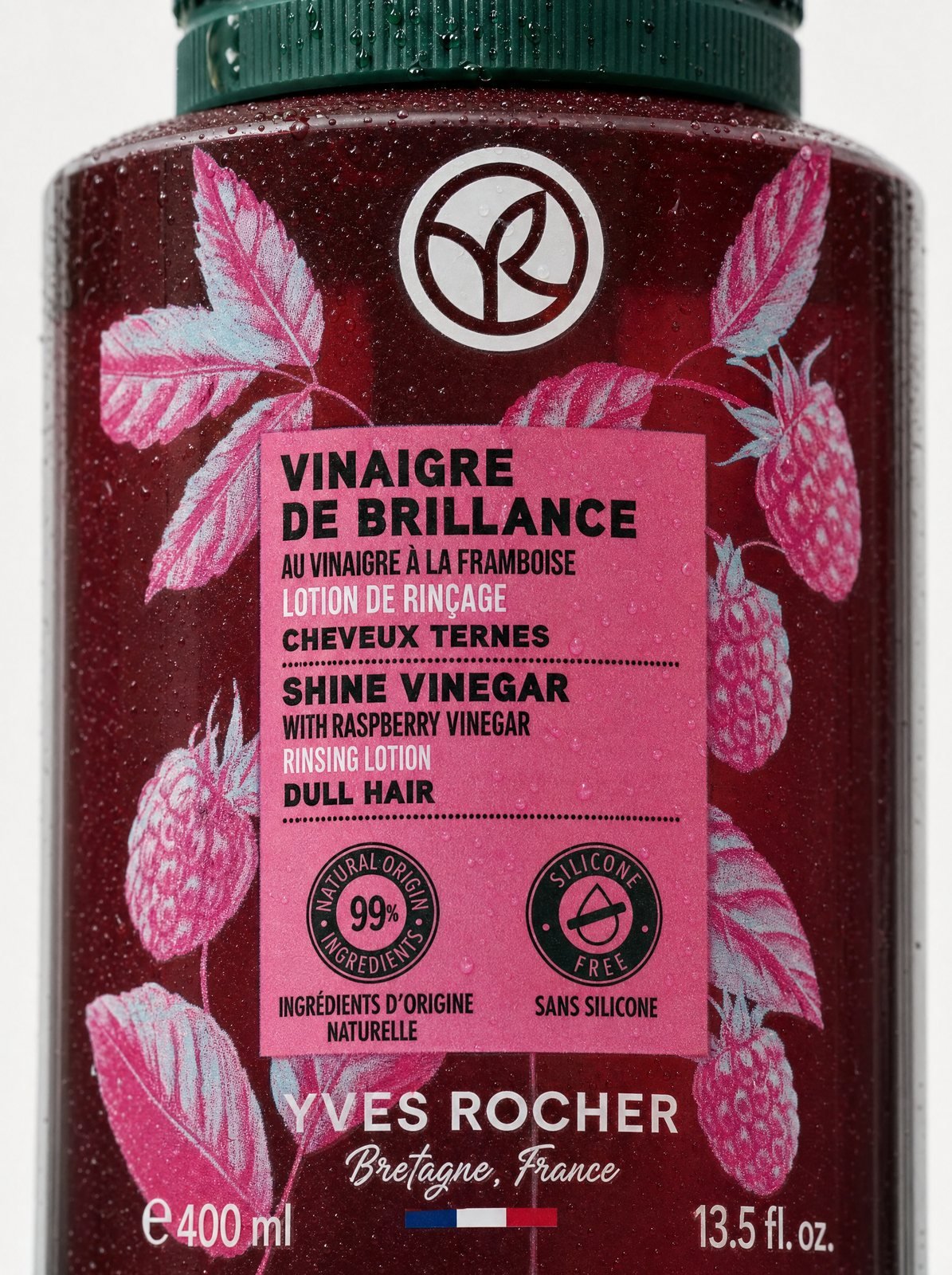
The Hair Shine Vinegar works the other way round. It is a rinse, not a coating: a mild raspberry-vinegar formula that dissolves the mineral and product residue sitting on the hair and lets the cuticle lie flat again.
Reason 03In France, This Is Just the Last Rinse.
Here's the part that still surprises us. A vinegar rinse isn't a trend anywhere in Europe — it's an old household habit, the thing a grandmother did on Sunday nights because the water made her hair like straw and the vinegar took it off. Kitchen vinegar is strong, stings if it runs into your eyes, and the smell hangs around. So a French house made a proper one.
Yves Rocher was founded in 1959 in La Gacilly, a village in Brittany, and it still does something almost no beauty company does: it grows its own botanicals on its own certified-organic fields, harvests them, formulates the products and sells them itself. No intermediaries between the plant and the bottle — which is also why a French household staple costs $34 here, and not the price of a salon gloss.
Their Shine Vinegar is a raspberry-vinegar rinse made for hair: mild fruit acids, a raspberry scent that rinses out clean, and one job. On the maker's own site it carries 567 reviews at 4.8 out of 5.
And why haven't you heard of it? Because it isn't on American drugstore shelves. Yves Rocher has sold direct since the beginning — by catalogue in 1959, online today — and a rinse that takes layers off is not something the aisle that sells the layers is in a hurry to tell you about. Pétale is a small U.S. boutique that brings it over, sourced direct from the maker and held in our own U.S. stock.
Reason 04What Actually Happens in Those 60 Seconds
Hair's healthy surface is naturally slightly acidic. A vinegar rinse simply returns it there. The mild fruit acids in the raspberry vinegar lower the pH at the surface, which prompts the cuticle scales to contract and lie flat. At the same time, the acidity dissolves the mineral residue hard water leaves behind — the maker's own word for it is that the raspberry vinegar “neutralizes limescale.” A flatter cuticle plus a cleaner surface equals more light bounced straight back.
Shampoo
as usual
Condition
rinse it out
The rinse
shake, work through lengths & scalp
Leave one minute
the acids do the work
Rinse cool
cool water helps the cuticle lie flat
“Delivers a more intense shine than rinsing with water alone.”
— Yves Rocher, product description
“It's watery.” Yes — that's the point.
The most common criticism in the reviews is that it's too watery, and the reviewer is right. It is water-thin on purpose. It isn't adding anything to your hair, so there is nothing for it to feel like. It runs straight through, takes the film with it, and leaves nothing behind. If you're used to products that announce themselves by coating your hands, the first pour is disarming. The mirror is where it announces itself instead.
Demonstration filmed with an AI presenter
Real resultsBefore & After — the Maker's Own Photographs
We don't stage before-and-afters, and we don't generate them. These are Yves Rocher's, from the product's own page, unretouched. Look at where the light sits on the hair in each pair.
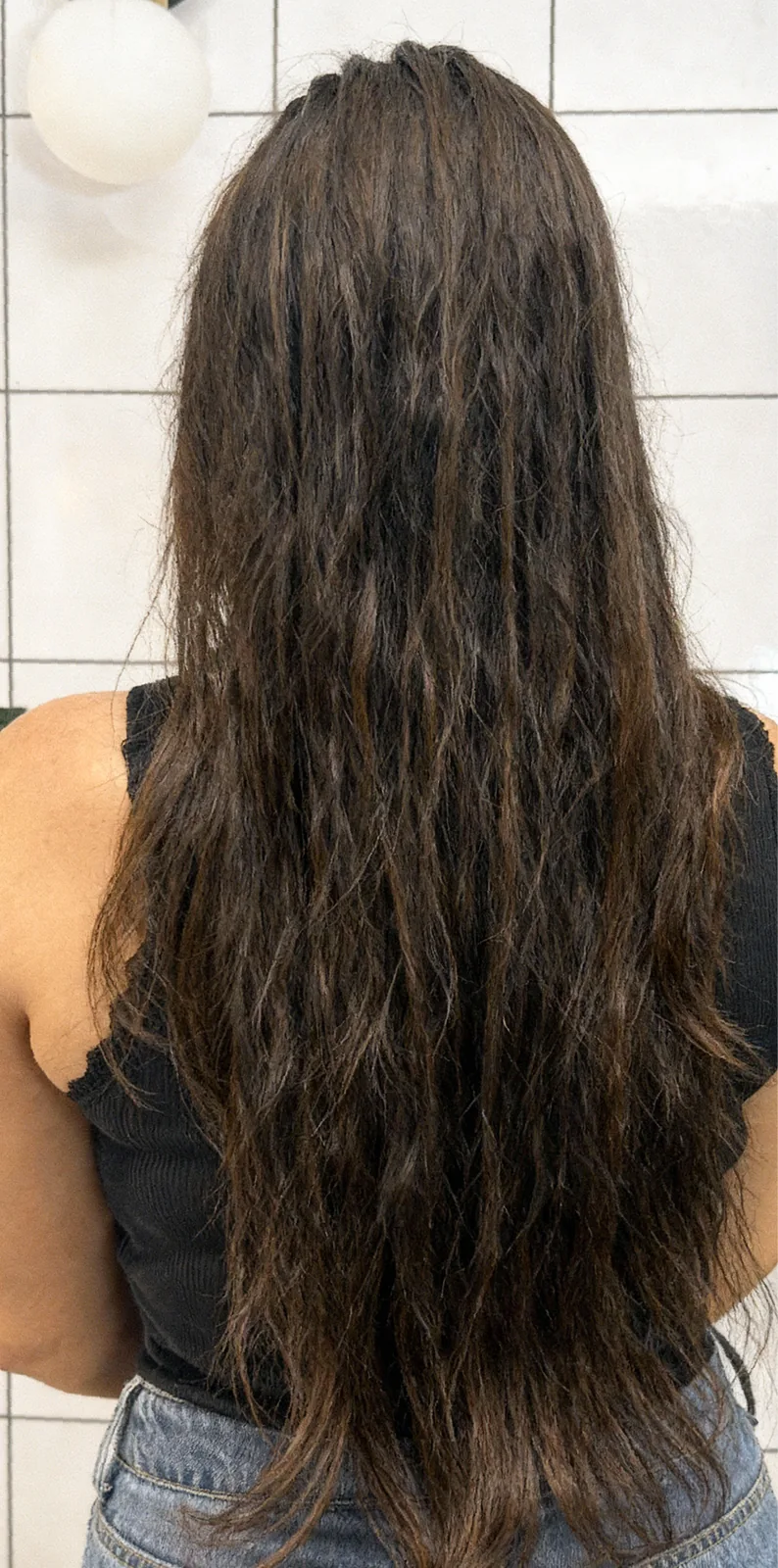
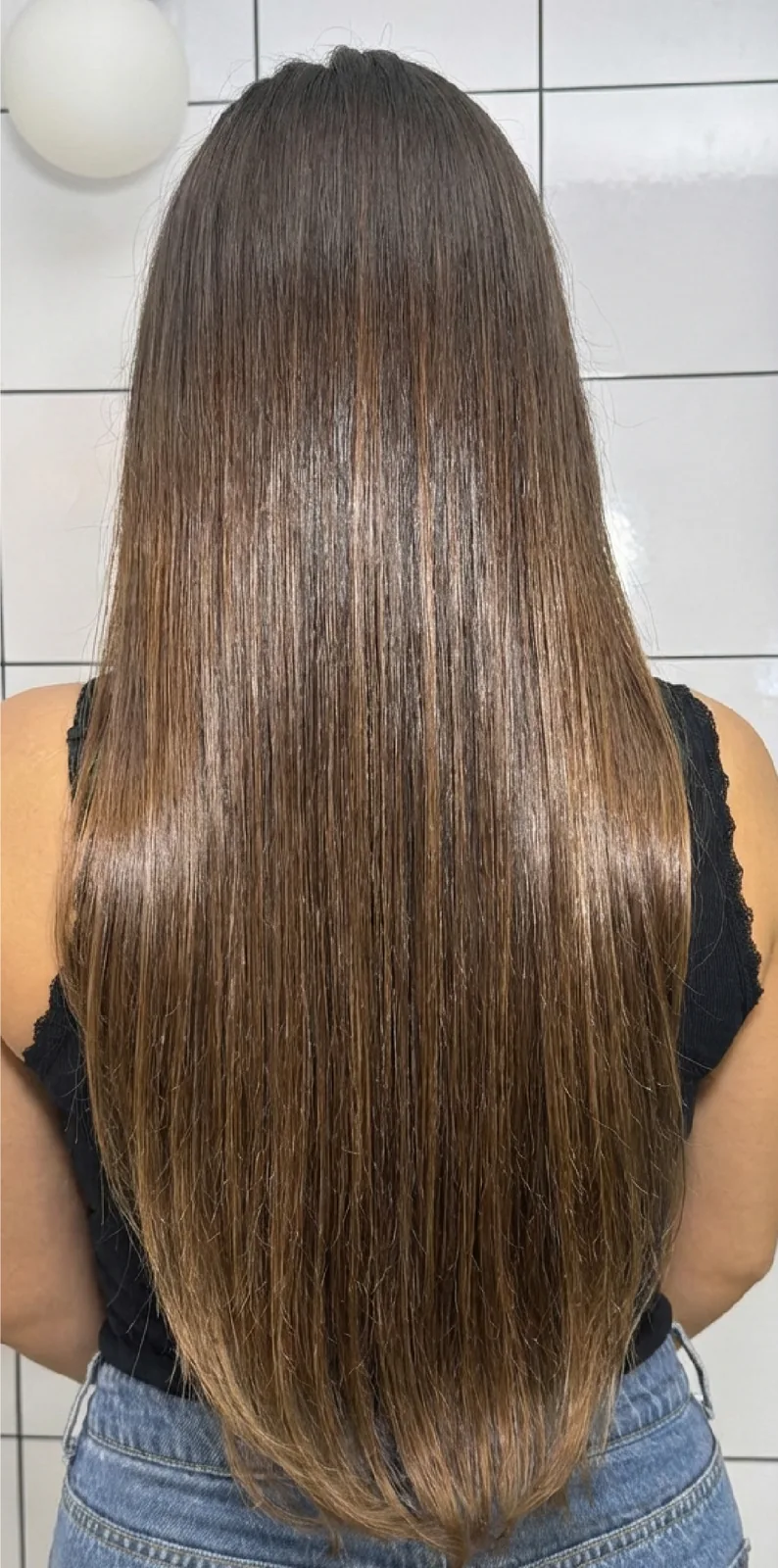
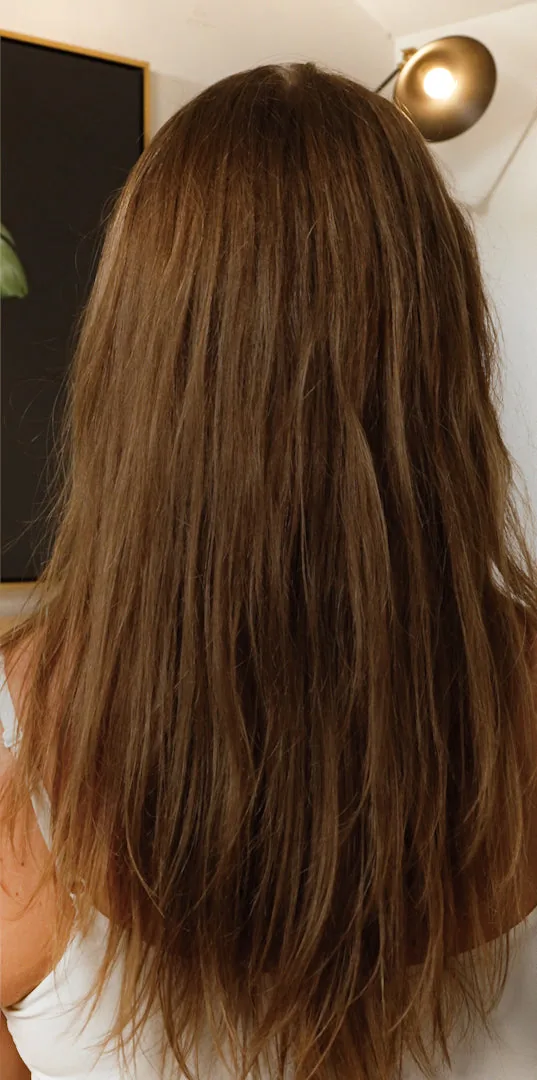
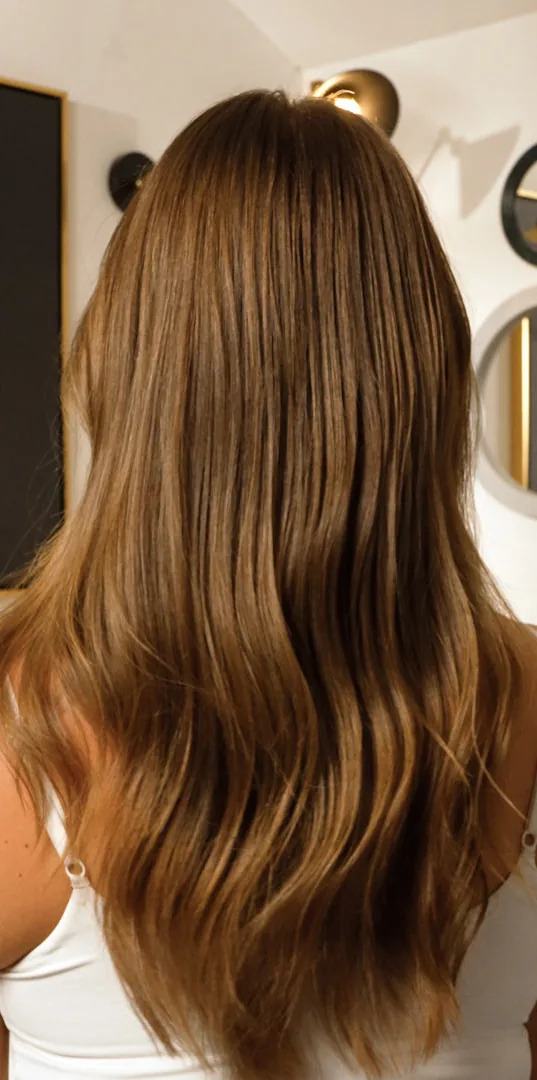
Photos: Yves Rocher, the maker. Individual results vary.
Read the 2-Star Reviews First
These are verbatim reviews published by the manufacturer. We show the critical ones on purpose: they tell you exactly who this is not for.
We believe both of the last two. If your hair isn't coated, there is nothing to take off, and a rinse that removes what's in the way will feel like rinsing with water. Which is exactly why the test below matters more than anything on this page.
Before you decideThe Ten-Second Test
Tonight, in the shower, look up. If the spray goes sideways, if the holes on the shower head are crusted white, that's the water your hair rinses in every day. Or look at the little DESCALE light on the coffee maker. Or the haze on the glass door that never quite wipes off.
Clean head, clear glass, no light: stop reading. This bottle probably isn't for you, and we'd rather tell you now than after you've paid for shipping.
If you've already seen it — you don't need the test.
Where to find itWhy There's a Limit
Pétale is a small boutique, not a warehouse. We hold limited stock of the Hair Shine Vinegar in the U.S. — and the founding gift that comes with your first two bottles exists exactly sixty times. Not sixty a week. Sixty, total, for the first sixty orders over $55 — when they're gone, the offer simply closes.
What's on the shelf right now — while it lasts
The full 400 ml bottle is $34. Two bottles unlock free U.S. shipping and open the founding gift — up to $40, on us, chosen by you in the bag. Four bottles are $100, four for the price of three. Thirty-day returns: write to us and we'll take it from there.
See if Pétale has the Hair Shine Vinegar in stock right now
Hair Shine Vinegar

Results photos and video are the maker's (Yves Rocher) and are shown unretouched; individual results vary. Customer quotes are verbatim reviews published by the manufacturer on its own site (567 reviews, 4.8 average at time of writing), including critical ones. The hard-water figure is from the U.S. Geological Survey. Demonstration clips use an AI-generated presenter. The founding gift is limited to the first sixty qualifying orders in total. Pétale is an independent retailer of authentic Yves Rocher products and is not affiliated with the manufacturer.